
Is A Slow-Healing Leg Wound, Bad Odor, Skin Discoloration, Excess Drainage, Or An Open Sore Making You Worried It's Getting Worse?
It May Not Be Just a Skin Problem.
If you have a wound on your leg, ankle, or foot that keeps reopening, doesn't stop draining, refuses to heal or has a strange bad odor…
The problem may be deeper than the surface.
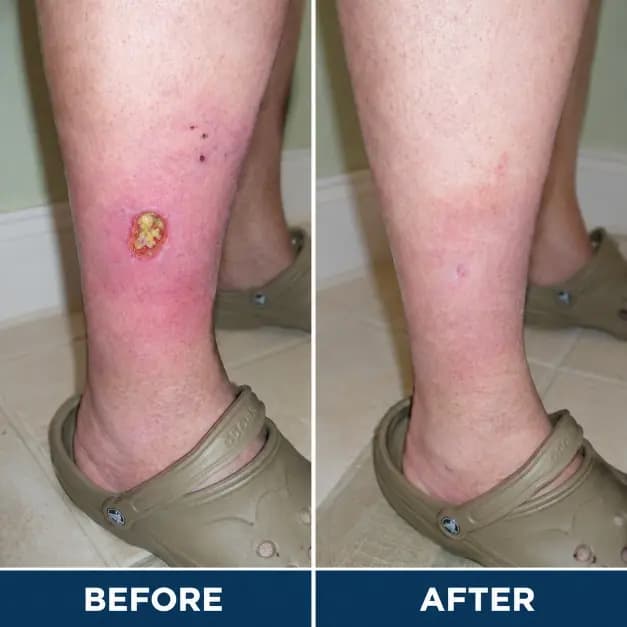
At Varicose MD, we now offer SkinBreak Checkup™ — a wound-care evaluation designed to look at the wound, the surrounding skin, swelling, and the vein or circulation issues that may be slowing healing.
Because some wounds do not keep coming back by accident.
They may be a sign that something underneath needs to be checked.
As Seen On:






Backed By Proven Treatments. Trusted By Thousands Of Happy Customers.
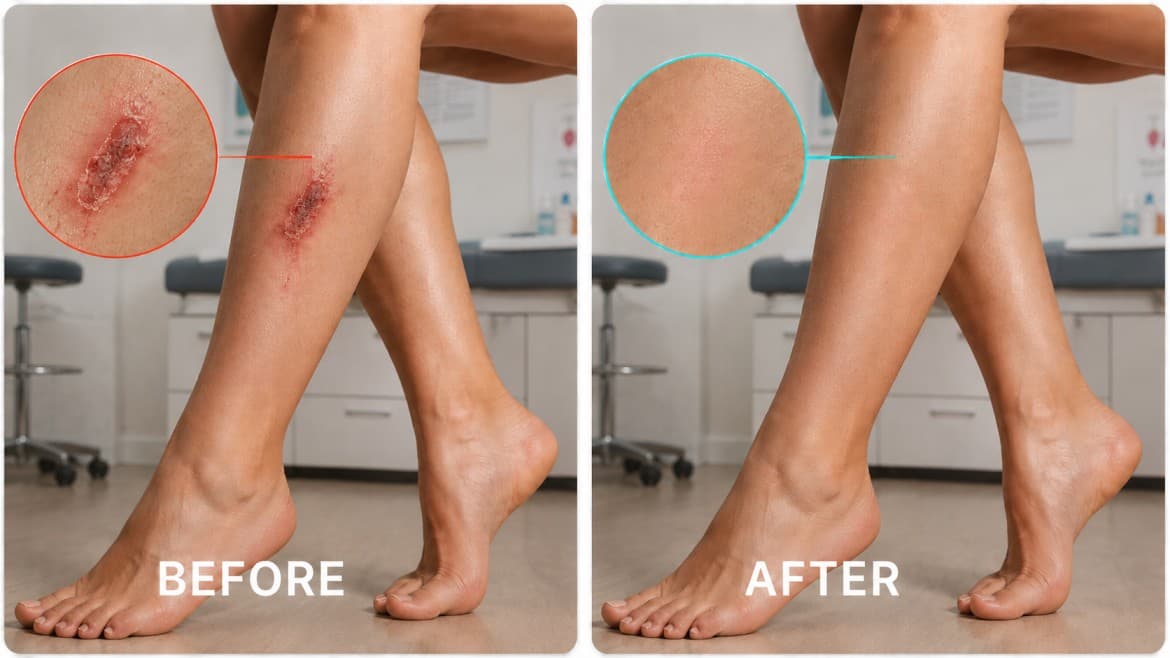
Not Sure Why Your Leg Wound Isn't Healing?
A slow-healing wound may not be just a skin problem. This quick survey helps you find out if your slow-healing leg wound is just a surface wound — or a sign that something deeper may be slowing healing.
- Check if your wound may be connected to swelling, drainage, or circulation issues
- Understand why it keeps reopening, leaking, or refusing to close
- Find out if the SkinBreak™ Checkup may be the right next step
- Get instant booking access after your results
If you are a good fit, our team will reach out to help you schedule your SkinBreak™ Checkup at Varicose MD.
Get real answers. Find out what may be slowing your healing.
What Is SkinBreak Checkup™?
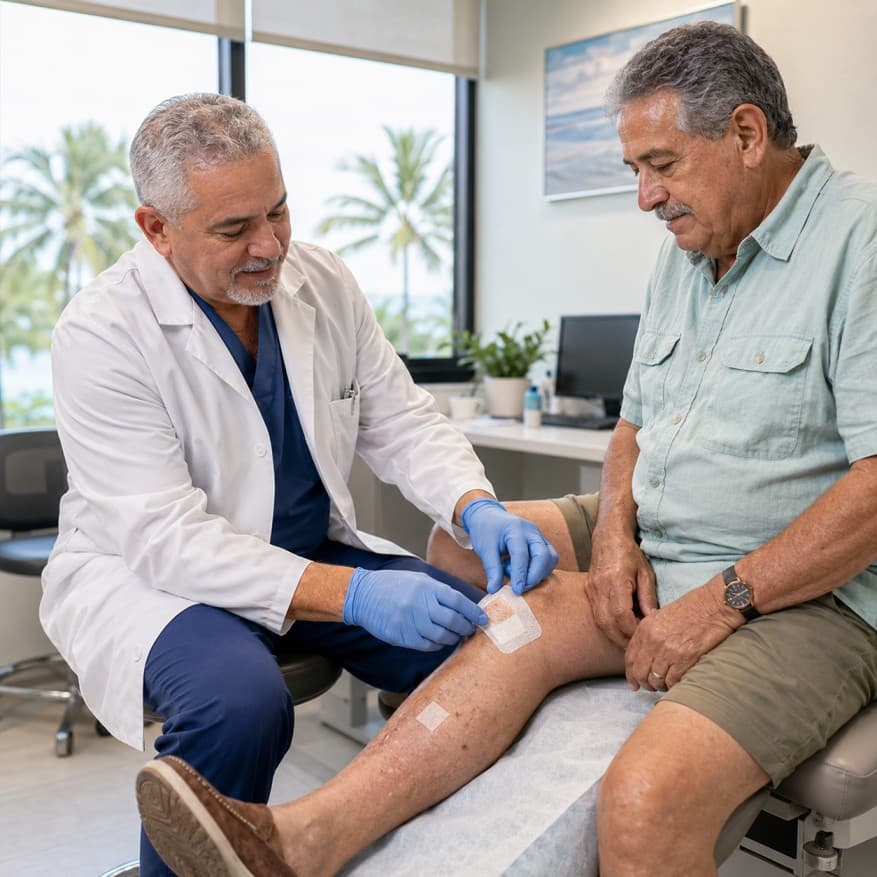
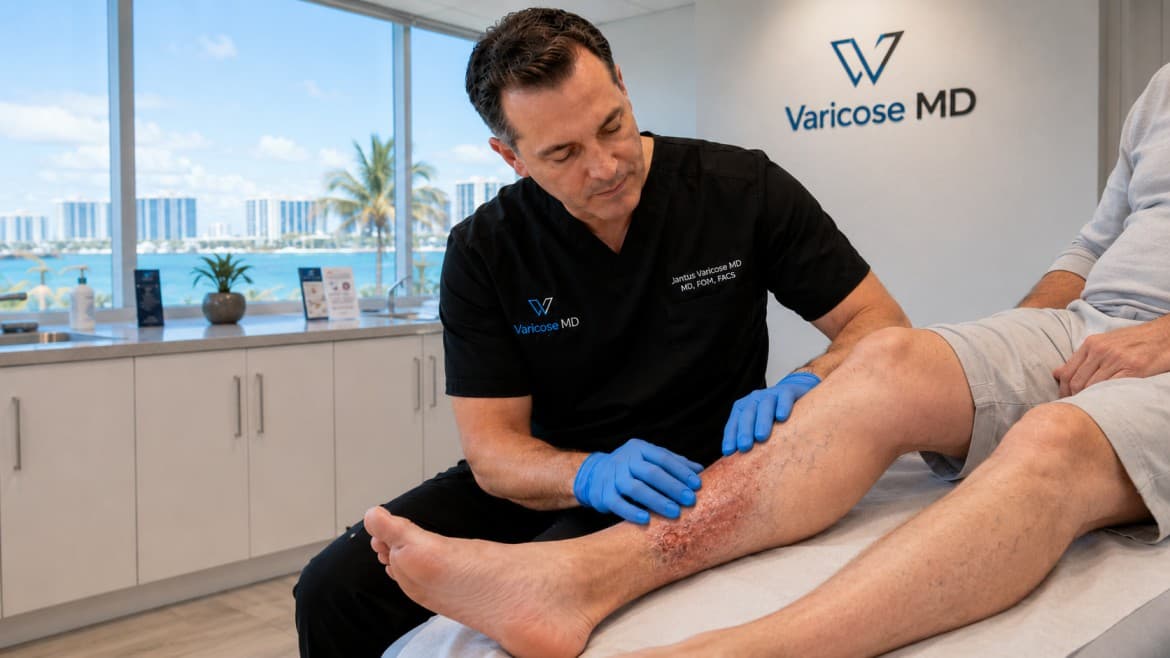
SkinBreak Checkup™ is Varicose MD's wound-care evaluation for slow-healing lower-leg wounds.
Most people think of a wound as a skin problem.
But when a wound appears on the leg, ankle, or foot — especially when there is swelling, discoloration, varicose veins, diabetes, or poor circulation — the wound may need a deeper evaluation.
SkinBreak Checkup™ helps our team evaluate:
- The wound itself
- The surrounding skin
- Swelling around the lower leg or ankle
- Drainage, odor, redness, or discomfort
- Skin discoloration or breakdown
- Whether circulation or vein issues may be contributing
- Whether coordinated wound care may be needed
The goal is simple:
To help you understand why the wound may not be improving — and what type of care may be appropriate.
Why Our Wound Care Approach Works
When Dressings, Ointments, And Compression Haven't Helped
Most wound care focuses on covering the wound.
But if your leg wound keeps reopening, draining, or refusing to close, the problem may be deeper than the skin.
At Varicose MD, our SkinBreak™ Checkup looks at the wound, swelling, skin discoloration, drainage, and possible vein or circulation issues that may be slowing healing.
That gives our team a clearer picture of what may be going on — and helps us recommend a more complete wound-care plan before the problem gets worse.
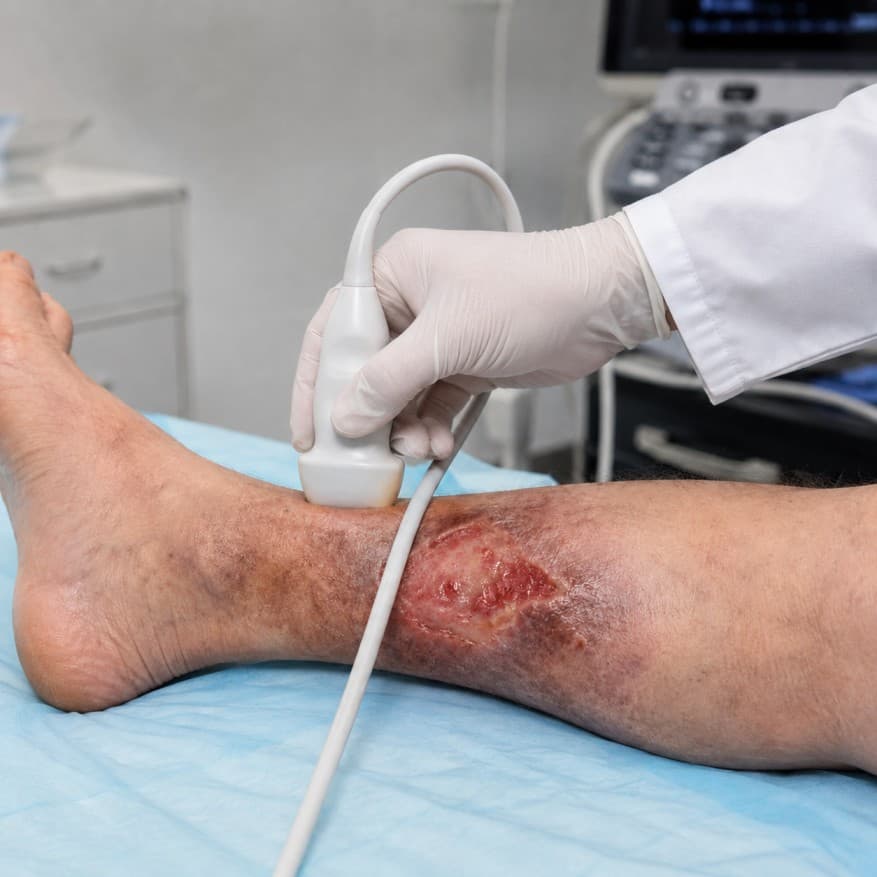
You May Be A Candidate If You Have:
- A wound that has not improved after several weeks
- An open sore on the leg, ankle, or foot
- A wound that keeps reopening
- A diabetic foot wound
- A venous leg ulcer
- Swelling around the wound
- Skin discoloration near the wound
- Drainage or odor
- Pain, tenderness, or discomfort
- Varicose veins near the wound
- A lower-leg wound that keeps getting worse
If any of these sound familiar, your wound may need more than another bandage or cream.
It may need a deeper look.
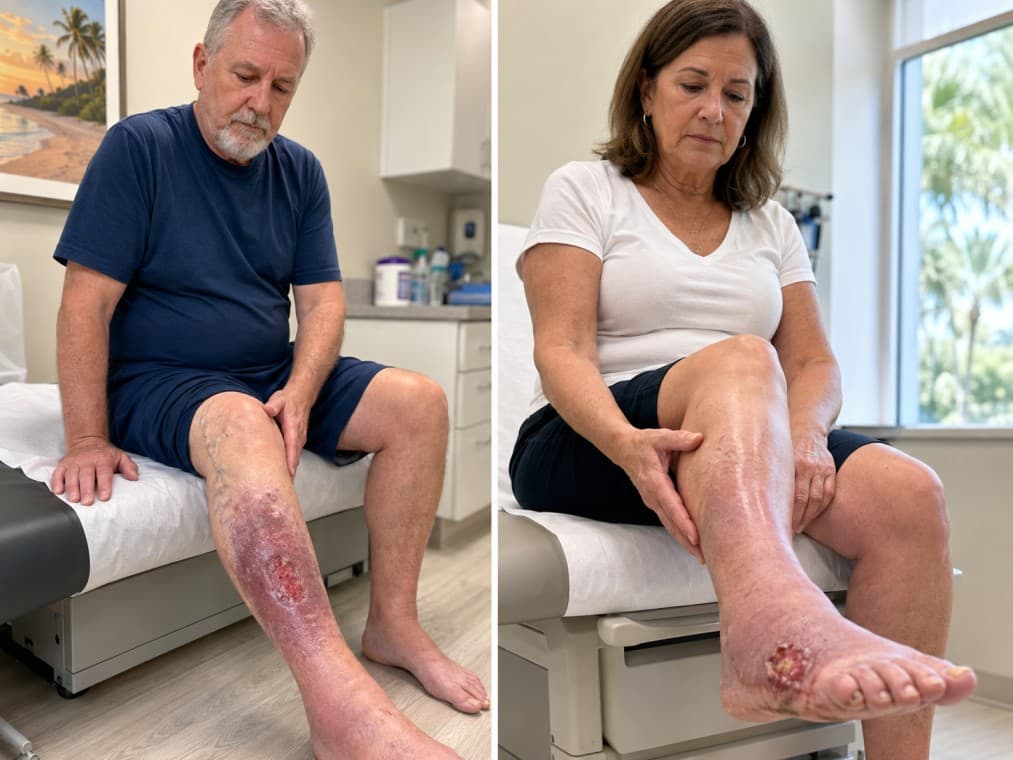
Why Wounds On The Leg Can Be Different
A slow-healing wound on the leg is not always the same as a simple cut.
Lower-leg wounds can sometimes be connected to circulation problems, swelling, venous insufficiency, diabetes, or other medical issues that interfere with healing.
That is why Varicose MD looks beyond the visible wound.
Our team evaluates the wound and checks whether vein or circulation problems may be part of the reason healing has stalled.
What We Help With
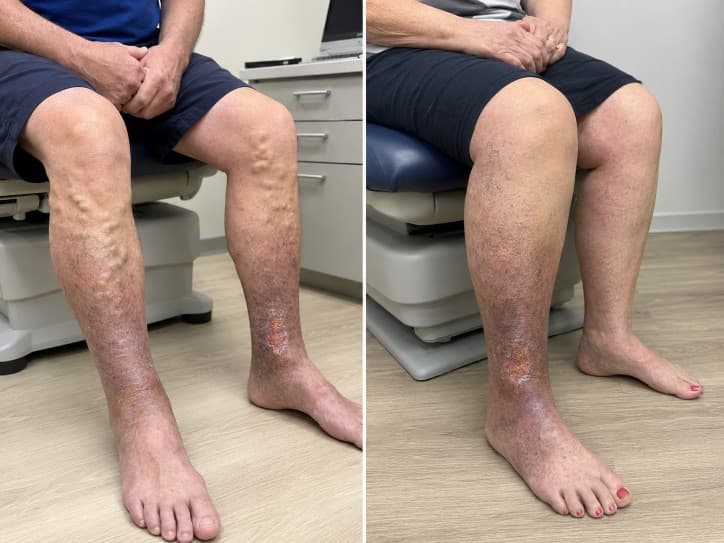
Venous Leg Ulcers
Open sores that often appear around the lower leg or ankle and may be connected to vein disease, swelling, or chronic venous insufficiency.
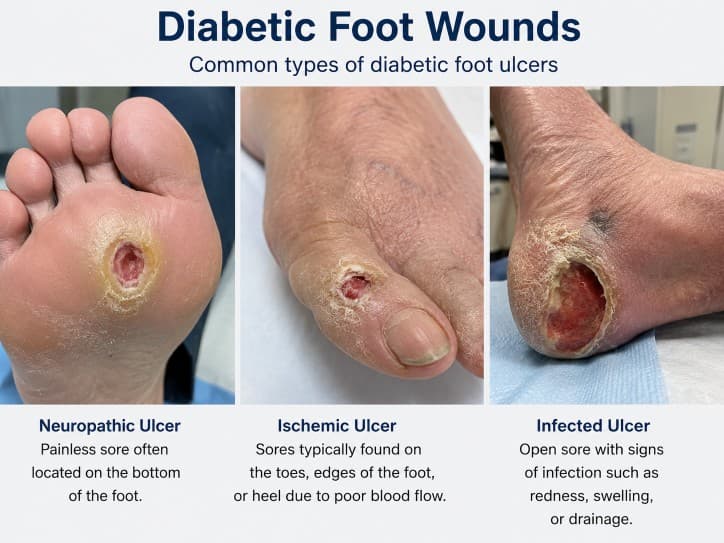
Diabetic Foot Wounds
Wounds associated with diabetes that require careful monitoring and coordination with other healthcare providers when needed.
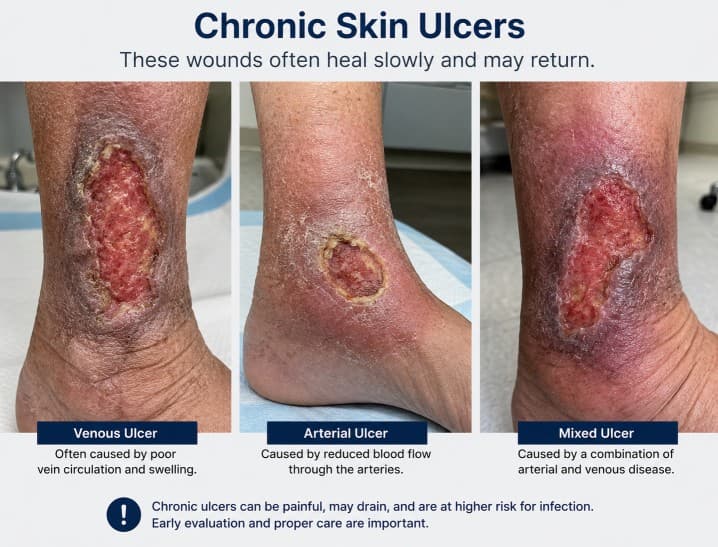
Chronic Skin Ulcers
Persistent wounds that may be connected to poor circulation, swelling, or other underlying medical conditions.
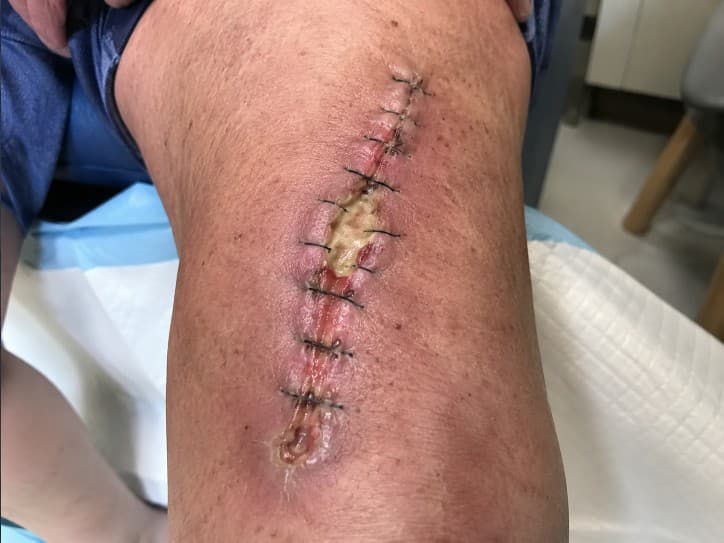
Non-Healing Surgical Wounds
Surgical sites or incisions that are not healing the way they should.
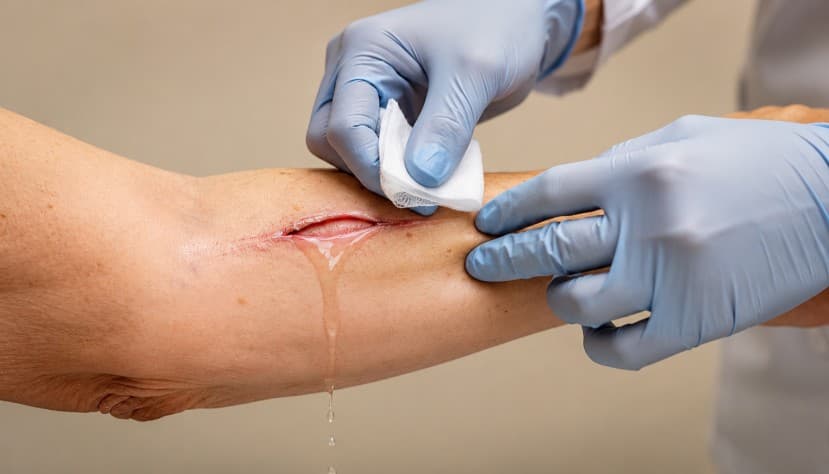
Traumatic Wounds
Wounds caused by injury, trauma, or accidents that may need specialized wound care.
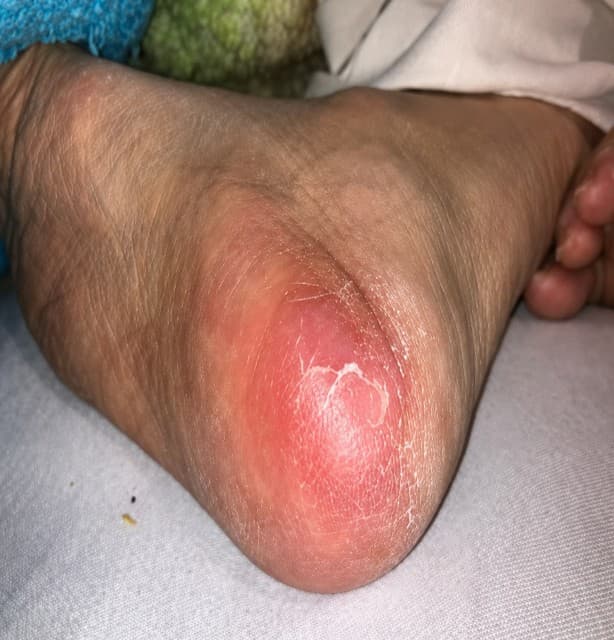
Pressure Injuries
Wounds caused by prolonged pressure on the skin and underlying tissue.
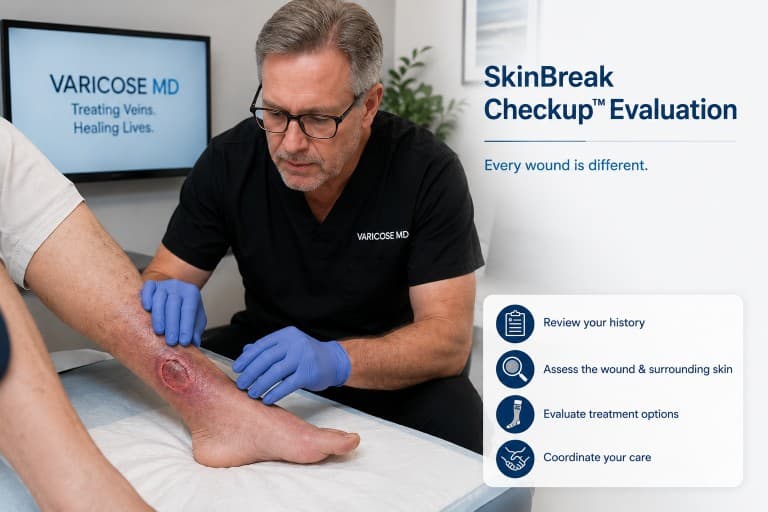
What Happens During Your SkinBreak Checkup™ Evaluation?
Every wound is different.
During your evaluation, the Varicose MD team may review:
- Your wound history
- How long the wound has been open
- Whether it has improved, worsened, or reopened
- Your medical history
- Any diabetes, swelling, vein disease, or circulation concerns
- The condition of the wound tissue
- The skin around the wound
- Whether compression therapy may be appropriate
- Whether vein or circulation evaluation may be needed
- Whether coordinated care with other providers may help
From there, the team can recommend a personalized wound-care plan based on your situation.
Why Choose Varicose MD For Wound Care?
Most wound care focuses on the surface.
Varicose MD looks deeper.
Because our practice specializes in vein disease and circulation evaluation, we are able to assess whether swelling, venous insufficiency, or vascular issues may be contributing to delayed healing.
That makes SkinBreak Checkup™ different.
It is not just about covering the wound.
It is about understanding what may be keeping it open.
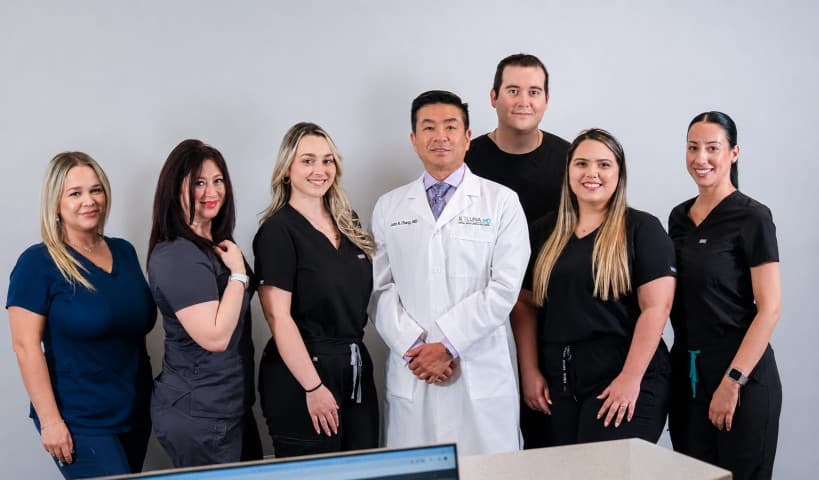
What Our Patients Often Say
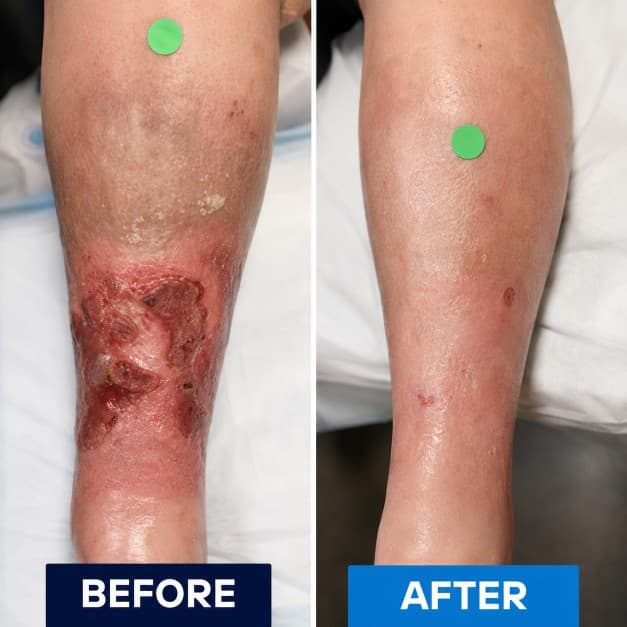
I thought it was just a small skin wound. But after a few weeks, it still wasn't closing. The SkinBreak Checkup™ helped me understand there may be more going on under the surface.
María Elena — Kendall, FL
58 years old
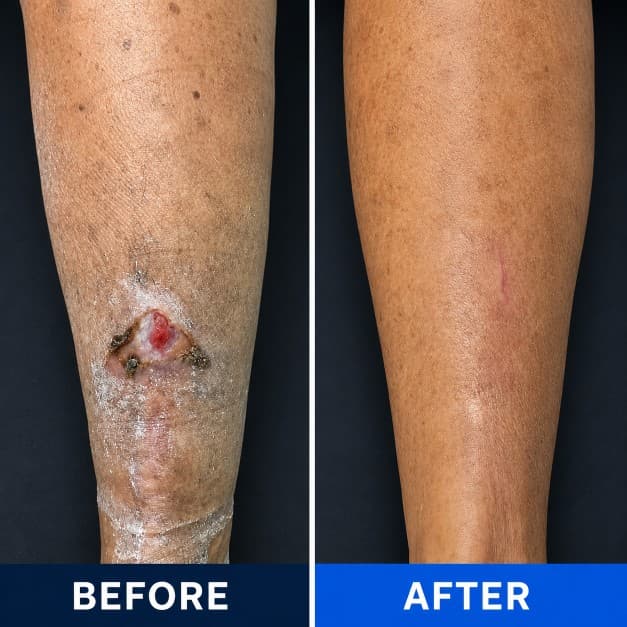
My lower-leg wound kept opening again after I thought it was getting better. Varicose MD helped me get clarity and understand what the next step could be.
Carlos — Hollywood, FL
62 years old
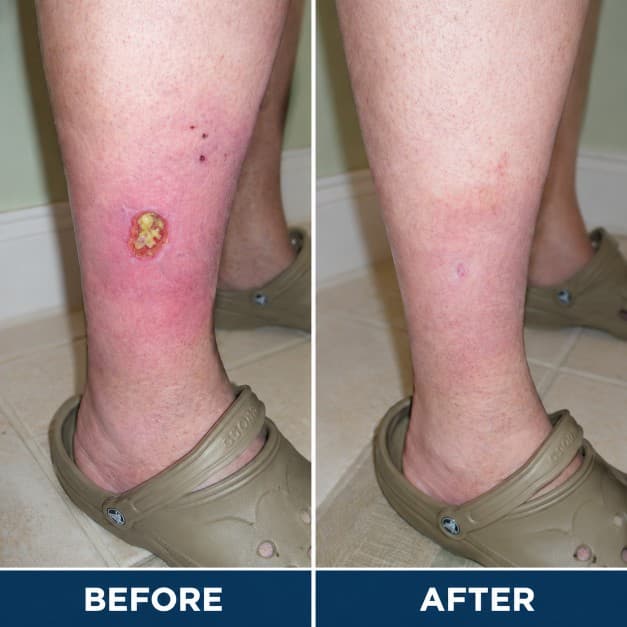
They didn't just look at the wound. They looked at the skin around it, the swelling, and my history. I finally felt like someone was looking at the full picture.
Patricia — Hialeah, FL
55 years old
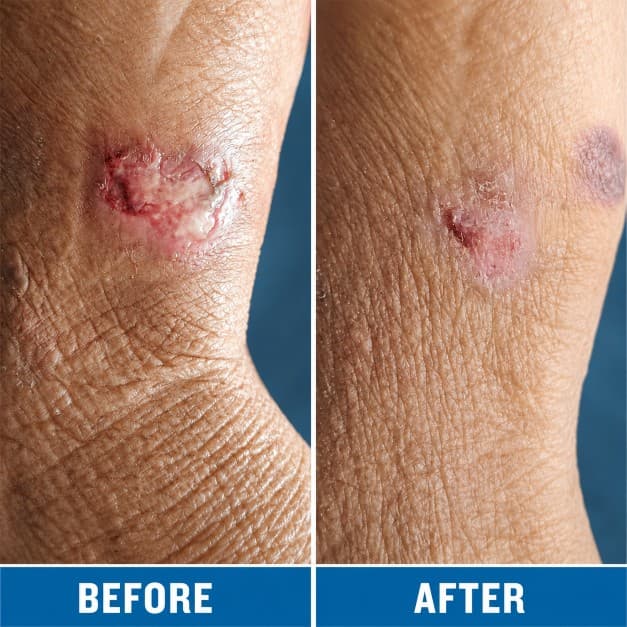
I had swelling around my ankle and a wound that would not improve. The team explained everything clearly and made me feel comfortable during the evaluation.
Jorge — Miami, FL
64 years old
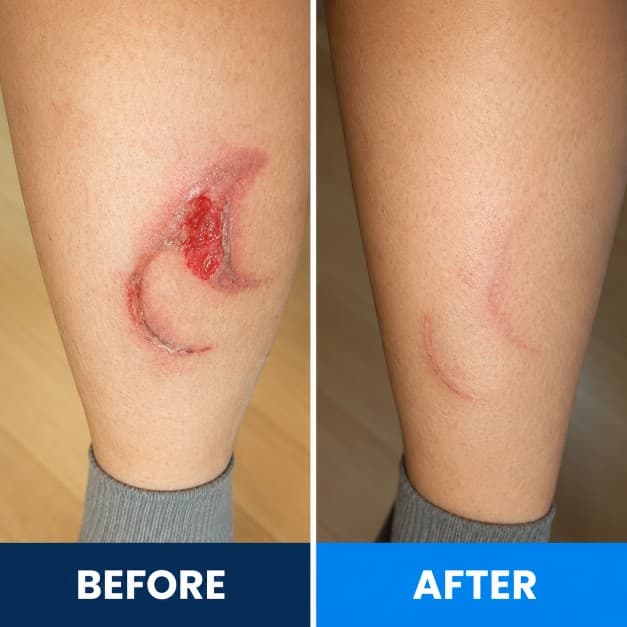
I was nervous because my wound kept draining. The SkinBreak Checkup™ helped me understand that the surrounding skin and swelling mattered too.
Ana — Sunny Isles, FL
49 years old
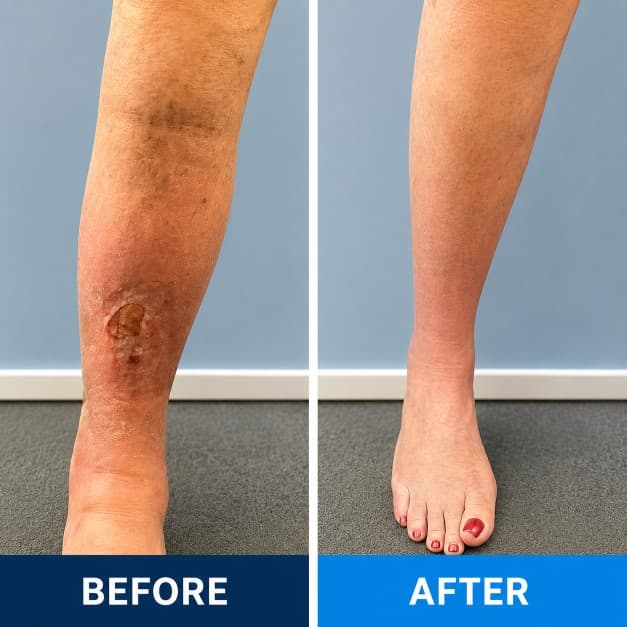
I kept changing bandages at home, but the wound still wasn't healing the way I expected. Varicose MD helped me stop guessing and get a clearer direction.
Luis — Pembroke Pines, FL
60 years old
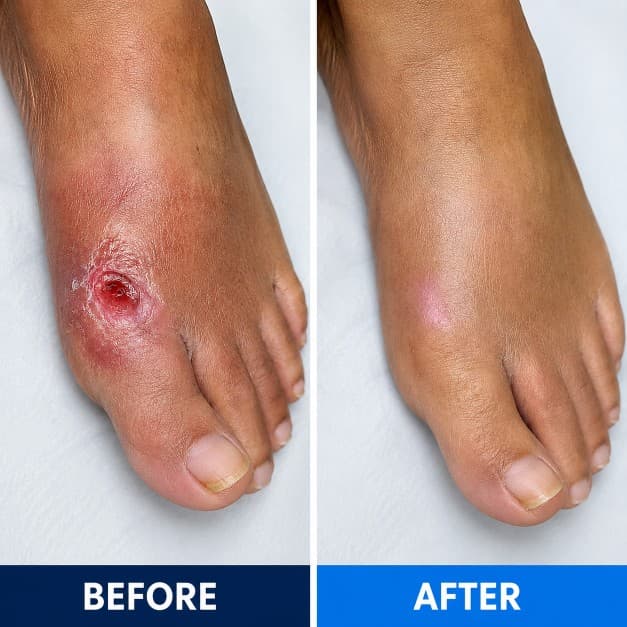
As someone with diabetes, I did not want to ignore a foot wound. The SkinBreak Checkup™ helped me feel more confident about getting it evaluated.
Marta — Miramar, FL
65 years old
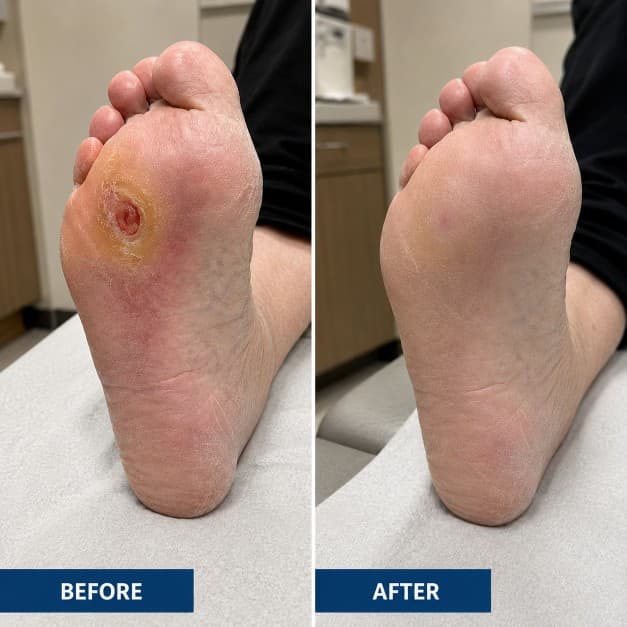
I thought I could wait it out, but the wound kept coming back. I'm glad I came in. The team helped me understand what may be slowing the healing.
Roberto — Aventura, FL
57 years old
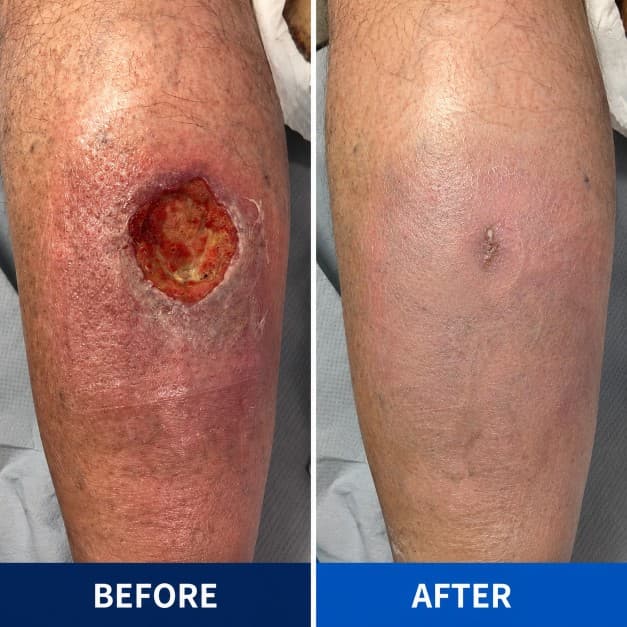
My leg had discoloration, swelling, and a wound that scared me. The evaluation was simple, calm, and gave me a better idea of what may be going on.
Gloria — Doral, FL
63 years old
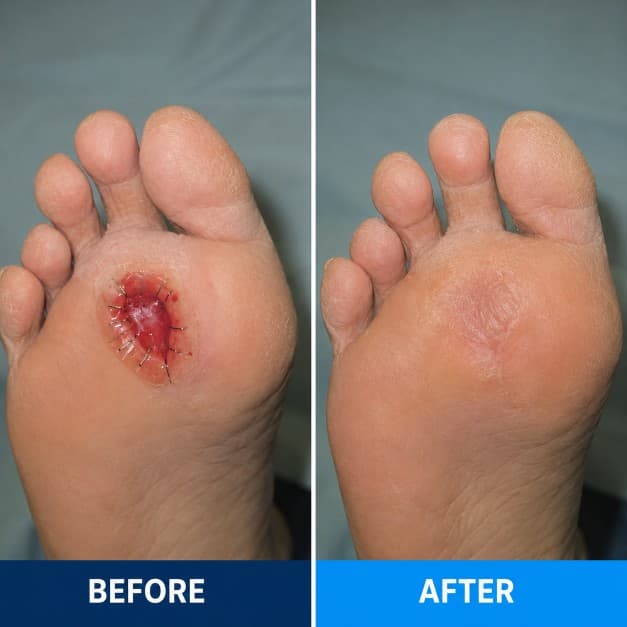
I liked that they didn't rush me. They asked about my wound history, my swelling, and my overall health. It felt like a real evaluation, not just a quick look.
Miguel — North Miami, FL
52 years old
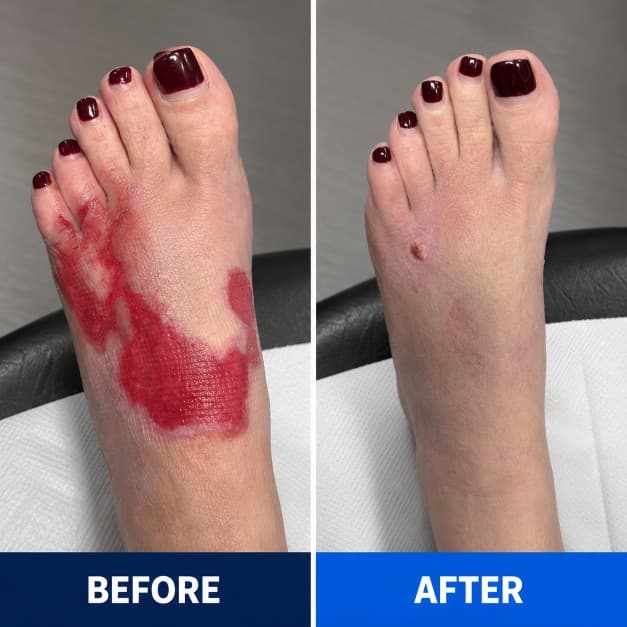
My wound looked small at first, but it kept bothering me. The SkinBreak Checkup™ helped me understand why it may need more than just another bandage.
Rosa — Miami Lakes, FL
61 years old
Don't Keep Guessing Why Your Wound Isn't Healing
If you have a slow-healing wound on your leg, ankle, or foot, start with the quick pre-screening survey.
Our team will review your answers and help you understand whether the SkinBreak Checkup™ Evaluation may be the right next step.
Take The 60 Second Survey & Book A SkinBreak Checkup™. Get Real Answers. Find Real Relief.SkinBreak Checkup™ FAQ
What is the SkinBreak Checkup™?
The SkinBreak Checkup™ is Varicose MD's wound-care evaluation for people dealing with slow-healing wounds on the leg, ankle, or foot. It is designed to help our team look beyond the surface wound and understand what may be affecting healing, including swelling, skin changes, wound drainage, medical history, vein issues, or circulation concerns.
Who is the SkinBreak Checkup™ for?
You may be a candidate if you have: a wound that has not improved after several weeks; an open sore on the leg, ankle, or foot; a wound that keeps reopening; a diabetic foot wound; a venous leg ulcer; swelling around the wound; skin discoloration near the wound; drainage, odor, redness, pain, or discomfort; varicose veins near the wound; or a lower-leg wound that seems to be getting worse.
Is a slow-healing leg wound just a skin problem?
Not always. Many people think a wound is only a skin issue. But when a wound appears on the lower leg, ankle, or foot — especially when there is swelling, discoloration, varicose veins, diabetes, or circulation concerns — the wound may need a deeper evaluation. That is the reason behind the SkinBreak Checkup™.
What happens during the SkinBreak Checkup™ Evaluation?
Every wound is different. During your evaluation, the Varicose MD team may review: your wound history; how long the wound has been open; whether it has improved, worsened, or reopened; your medical history; any diabetes, swelling, vein disease, or circulation concerns; the condition of the wound tissue; the skin around the wound; whether compression therapy may be appropriate; whether vein or circulation evaluation may be needed; and whether coordinated care with other providers may help.
Why would Varicose MD offer wound care?
Varicose MD already focuses on vein health, leg symptoms, swelling, circulation concerns, and lower-leg issues. Some slow-healing wounds may be connected to vein or circulation problems underneath the surface. SkinBreak Checkup™ allows the team to evaluate the wound while also considering whether vein or circulation issues may be contributing.
Does SkinBreak Checkup™ treat the wound?
SkinBreak Checkup™ is an evaluation. It helps the team understand what may be contributing to the wound and what type of care may be appropriate. After the evaluation, the team can help guide you toward the next step based on your situation.
Is this only for diabetic wounds?
No. The SkinBreak Checkup™ may be helpful for diabetic foot wounds, but it is also for other slow-healing lower-leg wounds, including wounds near the ankle or foot, wounds that keep reopening, wounds with swelling, wounds with skin discoloration, and possible venous leg ulcers.
What if my wound keeps reopening?
A wound that closes and then opens again may be a sign that something deeper needs to be evaluated. The SkinBreak Checkup™ helps the team look at the wound itself, the skin around it, swelling, your history, and whether vein or circulation issues may be part of the problem.
What if I have swelling around the wound?
Swelling around a wound can matter. During the SkinBreak Checkup™, the team may look at swelling in the lower leg or ankle and determine whether it may be affecting the wound or whether further evaluation may be needed.
What if there is drainage or odor?
Drainage, odor, redness, or discomfort should not be ignored. The SkinBreak Checkup™ helps review those symptoms as part of the overall wound evaluation. If you have fever, severe pain, spreading redness, pus, strong odor, or the wound is getting worse quickly, seek urgent medical attention right away.
Will I need vein treatment?
Not everyone will need vein treatment. The SkinBreak Checkup™ helps determine whether vein or circulation evaluation may be appropriate. If the team believes vein issues may be contributing, they can guide you toward the next step.
Is ultrasound used for wound care?
Ultrasound should not be framed as "treating the wound." The more accurate Varicose MD framing is that vein or circulation evaluation may be needed when a lower-leg wound is slow to heal. If blood flow or vein issues may be contributing, the team may recommend further evaluation.
How do I start?
Start with the quick pre-screening survey. Your answers help the Varicose MD team understand what you are dealing with and whether the SkinBreak Checkup™ Evaluation may be the right next step.
Does the SkinBreak Checkup™ guarantee my wound will heal?
No. SkinBreak Checkup™ is an evaluation and does not guarantee a specific outcome. The goal is to help you understand why the wound may not be improving and what type of care may be appropriate.
When should I seek urgent medical help instead of waiting?
Seek urgent medical attention right away if your wound has: spreading redness; fever; severe pain; pus; strong odor; rapid deterioration; black tissue; or signs of infection. A wound that is getting worse quickly should not wait for a normal appointment.
Important Medical Notice
If you have fever, severe pain, signs of infection, rapidly worsening symptoms, or a wound that appears infected, seek urgent medical attention right away. SkinBreak Checkup™ is an evaluation process and does not guarantee healing or specific results. Individual results may vary.